MM Paris: Biophilia and other works

Wonderful intro screens on Bjork’s new site. Site design by MM Paris. Love the galactic type.

I’ve heard two versions of her Biophilia intro with either Bjork or David Attenborough narrating the same text. It sounds like a manifesto and it seeks to unite nature, music and technology. Nancy, since you have an iPhone, maybe you could look at this app in total? Might be worth the investment at $13, available here:
http://itunes.apple.com/us/app/bjork-biophilia/id434122935?mt=8
=====================

Tree of Signs,
MM/Paris collaboration with sculptor Gabríela Friðriksdóttir.
http://www.flickr.com/photos/buddah/2509630239/sizes/z/in/photostream/
5 meter tall bronze sculpture using the font created for Bjork’s album Medulla, and erected in a yet to be developed swath of land in Iceland.

Scott Snibbe

www.snibbe.com
An interdisciplinarian! Interactive designer for Bjork’s Biophilia app. A computer scientist and fine artist by training.
Biophilia pics from www.snibbe.com:

EDUCATION:
1992-1994 M.Sc., Computer Science, Brown University.
1987-1991 Bachelor of Arts, Computer Science, Brown University, Magna Cum Laude.
1987-1991 Bachelor of Fine Arts, Brown University, Magna Cum Laude.
1989-1992 Experimental Animation, Rhode Island School of Design.
=================
Article on his work on Bjork’s app Biophilia in The VIne, an Australian online magazine. Author Jason Treuen, Aug 19, 2011, Accessed 3/4/12 by Zvez
http://www.thevine.com.au/music/interviews/bjork-%27app%27-album-creator%2C-scott-snibbe-_-interview20110819.aspx

“While other artists have used apps to spruik their album, Bjork’s app is her album. You don’t just play the music, you play with the music. A mother app houses ten unique designed apps, which each contain a new song, music score and an interactive ‘game’ that lets you manipulate the track.”

Scott Snibbe is Biophilia’s executive producer…his company created the mother app and three song apps – ‘Virus’, ‘Thunderbolt’ and ‘Cosmogony’

Bjork worked with Apple…this is a very Apple-heavy project, using iPads in live performance, etc.

Virus’ is the latest song/app to be released. What can you tell us about it?

SS: “It’s as if you can touch this microscopic world. There’s a series of cells and a virus that attacks the mother cell in the centre. It’s kind of a game – you can fling the virus cells away, but if you do manage to do that, the song never progresses. So you have to lose the game to hear Bjork’s song. It’s really in line with the message of the song, which is the virus loves the cell so much, that she destroys him.”

….
“I also think the economics of the music industry are a big deal. Sales of recorded music have collapsed, so apps are a way of generating revenue if you have one that’s popular enough. And there’s probably a sweet spot. Biophilia is definitely a concept album kind of method – really big and expensive and time-consuming. But if you look at some of the other apps I’ve made, you can make something quite small that’s also quite popular. I think there’s a way for musicians to partner with interactive artists.

=============
Snibbe talks about his work for Bjork in this clip: http://vimeo.com/29256409

=============
Motion Phone, an interactive animation, “a new form of communication”:

MM Paris

1>>>
MM Paris received the Tokyo Type Directors Club award in 2012 for Björk’s Biophilia CD artwork, book and iPad application.
http://creativereview.co.uk/cr-blog/2011/july/the-return-of-bjork

more intriguing is Björk’s Biophilia app, which was created in collaboration with interactive artist and app developer Scott Snibbe, and the musician’s long-time design collaborators M/M (Paris). The app opens with a kind of manifesto on nature, music and technology, written by Björk and the Icelandic poet and author, Sjón, and narrated by Attenborough. Once the intro has finished, users can interact with the cosmos shown by using the standard Apple stroking and pinching techniques. There is also a menu that allows access to the individual songs. Like the Radio Soulwax app, Biophilia makes good use of the unique aspects of the iPad and iPhone, particularly their interactive elements. It again places visuals at the forefront of the music experience, providing yet more proof of the creative possibilities that technology is opening up for artists and musicians.

Not that Björk is entirely turning her back on the joy of analogue, however. In the shop on her website, you can pre-order a copy of Biophilia: The Ultimate Edition. For a cool £500, you will receive a lacquered and silkscreened oak-hinged lid case, containing the ‘Biophilia Manual’ along with 10 chrome-plated tuning forks, silkscreened on one face in 10 different colours, stamped at the back, and presented in a flocked tray. Each fork is adjusted to the tone of a Biophilia track, covering a complete octave in a non-conventional scale.

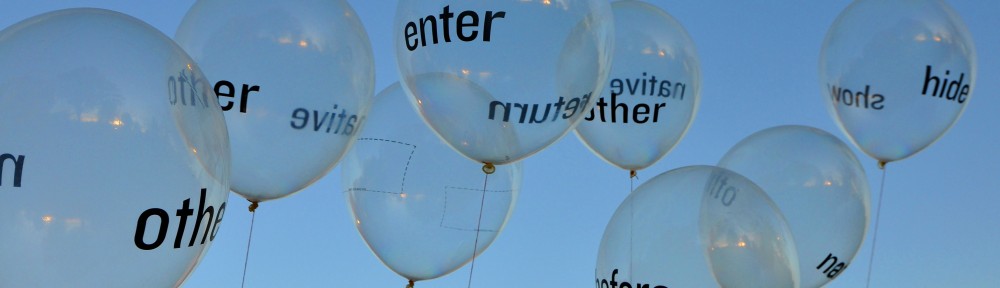
“…but much of nature is hidden from us, that we can neither see nor touch. Like the one phenomenon that can be said to move us more than any other in our daily lives: sound. Sound, harnessed by human beings, delivered with generosity and emotion, is what we call music. And just as we use music to express parts of us that would otherwise be hidden, so too can we use technology to make visible much of nature’s invisible world. In Biophilia, you will experience how the three come together: nature, music, technology. Listen, learn, and create.” — Sir David Attenborough, intro to Biophilia

2>>>
collaborative alphabet with inez van lamswwerde and vinoodh matadin http://www.mmparis.com/thealphabet/index.html


3>>>
collaborative scarves with Kanye West

Last Fall, Kanye West asked m/m (paris) to design the album packaging for My Beautiful Dark Twisted Fantasy. West had commissioned George Condo to create a series of paintings featuring the characters who populate his musical fantasies.During the creative process, m/m (paris) created a series of hand drawn ornamented frames to adorn the powerful and iconic Condo paintings.Playing with the many possibilities of combining the paintings and the frames, m/m (paris) and Kanye West wanted to find a luxurious expression of their creative efforts —and decided to use the most striking combinations and transform them into voluptuous silk scarves.

http://shop.mmparis.com/categories/kanye-west-scarves/

Building Creative Confidence

Excerpt from Ted Talk on Creative Confidence 2012, might be a topic worth addressing in method chapter.http://blog.ted.com/2012/03/01/building-creative-confidence-david-kelley-at-ted2012/

David Kelley starts off his story in third grade, at Oakdale School in Ohio. His friend Brian was making a horse out of clay. One of the girls sitting at his table looked over and said, “that’s terrible! That’s not what a horse looks like.” Brian’s shoulders sank, he wadded up the clay and threw away his horse–and Kelley never saw him take on a project quite like that again.

This type of thing happens all the time. People often become uncomfortable around creativity — and yet surely creativity is not the domain of only a chosen few. And so, Kelley set out to understand this phenomenon and think about how he might counter it. One of his first stops: the Stanford psychologist, Albert Bandura, who developed a step-by-step process to help people overcome their phobia of snakes. An unexpected consequence of this methodical journey: overcoming fear in one domain subsequently gave people new confidence in other areas of their lives, too…

Then he puts his own wish to the audience. Don’t divide the world into “creative” and “non-creative,” he urges. Let people realize they are naturally creative. “Let their ideas fly; let them achieve what Bandura calls self-efficacy,” he concludes. ”When people regain that confidence, magic happens.”

ideo.org

Ideo has started a non profit connected to the Gates Foundation amongst many other NGO’s. Designers both in-house and beyond can apply to participate.

Founded in 2011, IDEO.org has been busy creating change where change is desperately needed. Take a look at some of our recent projects and get as excited as we are about designing solutions for social impact around the world.

https://www.ideo.org/projects/history

1>>>
The Ripple Effect project: Innovations solutions to improve access to safe drinking water.

Social innovation seeks to create transformational change in under-served, underrepresented, and disadvantaged communities worldwide. At IDEO, we use design thinking to address issues such as poverty, nutrition, health, water and sanitation, economic empowerment, access to financial services, and gender equity.
Our projects involve clients in both the private and public sectors. To help them develop effective solutions, we create not only products and services, but also the entire system that supports them. This often means spending considerable time in the field, living and working with the people we’re striving to assist. We routinely partner with local leaders (who act as our trusted advisers) to ensure that all concepts and solutions are practical, culturally appropriate, scalable, and sustainable.
This means that before introducing anything new, we figure out what really matters to the target population—and what will motivate them to accept and adopt our solution.

2>>>
IDEO.org worked with the Bezos Family Foundation to design a campaign about the importance of early learning and engaged parenting, with a focus on supporting families in low income communities.
https://www.ideo.org/projects/early-learning-with-the-bezos-family-foundation/completed


“We’re trying to turn everyday interactions into opportunities for brain development. Shopping at the grocery store can be like a visit to a museum and singing can be the new reading. It all helps promote brain development.” Robin Bigio Ideo Fello
The latest brain research shows that the more parents engage with their children during the first five years of life, the more prepared they are to learn once they get to kindergarten. Many of the children showing up for kindergarten who are unprepared to learn live in low-income families. By providing tools, information and assistance that parents need to be their children’s first teachers, we can help low-income parents build their children’s brains, and create a future of more and better opportunities.

3>>>
Frameworks for improved nutrition
http://www.ideo.com/work/frameworks-for-improved-nutrition/

Obesity in the U.S. has reached record-breaking levels, especially among children and teens. According to the Centers for Disease Control (CDC), an estimated 17% of children and adolescents aged 2-19 are overweight. Resulting from an imbalance in the number of calories consumed and those expended, this epidemic involves genetic, behavioral, and environmental factors that could lead to serious health problems later in life.

The CDC, a sentinel for global health and wellness, strives to provide people with reliable health information and the benefits of strong public and private partnerships. Recognizing the growing obesity epidemic, the CDC and the Academy for Educational Development engaged IDEO to conduct a workshop relating to research done around lower-income women and exercise. The brief workshop led the CDC and IDEO to another congressionally mandated project for social impact—looking at fruit and vegetable consumption among tweens.

Currently undergoing this sixteen-week project, IDEO and the CDC are examining ways to change the habits of an entire generation of tweens—a group far more likely to change attitudes and behaviors about health before they become life-long issues. To date, IDEO has begun observations with a number of stakeholders and change agents, including nutrition experts, participants at the Edible Schoolyard, and children and staff members at 826 Valencia, a non-profit organization working at the forefront of examining new models of tutoring and tween behaviors. While still in the early phases of development, and with final deliverables still undefined, the team is looking at communication, product, or service design possibilities to promote wide-scale change and prevention in the battle against youth obesity, and the promotion of fruit and vegetable consumption.

sample chapter 101

INTERDISCIPLINARY METHOD

We live in a compartmentalized mind frame. Home is different from office, fun is separated from work, science lives apart from art. We’ve been trained to specialize in one thing and call that our profession, pushing our other interests down to lesser importance. Many of us, however, have several seemingly unrelated passions simmering within us, waiting to be manifested with the right method.

Interdisciplinary thinking turns compartmentalization on its head by encouraging the coming together of disparate interests. In her map painting series, designer Paula Scher, partner in the eminent studio, Pentagram, combined her passion for lettering, maps and painting to create a series cross-disciplinary works. Similarly, designer Andrew Byrom merged his love of typography and furniture to create typographic furniture, while the ceramicist Stephanie Dearmond cast letterforms in porcelain to make new and unexpected form. These are but a few examples of what can happen when we choose to combine our interests instead of segregating them.

Passions are fluid. They change shape and intensity. Introduce yourself to a new subject matter. Prod into a new discipline in order to give yourself a new perspective. A great way to do this is to talk to experts in other fields, as conversations fuel passions and can spark new ways of thinking. This is precisely why designer James Victore holds The Dinner Series, an annual week-long workshop where each day culminates in a lavish dinner party, meant to stimulate creative conversation. (Get Victore quote here).

Add additional examples of conversations: Etsy Street Teams and D:Center Baltimore’s monthly design conversations. 

Conversations can lead to striking collaborations between experts from different fields. Longtime collaborators  Michael Amzalag and Mathias Augustyniak of MM/Paris and photographers Inez van Lamsweerde and Vinoodh Matadin have produced hybrid photo/text works. (Show alphabet here). Likewise, designer Stephen Farrell has worked closely with writer Steve Tomasula to publish novels that bestow equal value on the design and the text. (Need example of designer working with a non-artistic collaborator). 

Add a paragraph on working with community — larger, social issues

How does this work get done? In this chapter, we give you some leads. We attempt here to break down the method of interdsiciplinary design into useful tools—charts and diagrams, tips on inter-personal relations, and guidelines for testing the work as you go along.
=====================
That Can’t Be Done. Can It?

Most of us have pulled the cord to flip venetian blinds open or closed hundreds of times, without giving it a second thought. To designer Andrew Byrom, this commonplace instance provided a burst of inspiration, as he envisioned letterforms made of blinds, switching from bold to regular to light with the pull of the cord. This notion has led him to build a series of letters out of venetian blinds, and further, to draw a striking flat font based on the idea of the window blind. (show images)

Byrom thinks in an unrestricted way, seeing the magical in the mundane by asking, “what if?” His thoughts flow from paper to screen, to metal work, kite construction and neon signage. In doing so, he constantly subverts existing parameters and pushes his way into other disciplines to nourish his creative needs. Byrom’s thinking is effective only because it is backed up by his eagerness to learn, to renounce the comfort of his mastery to for the thorny work of the beginner, failing again and again until a new skill has been learned.

Fluid thinking allows us to see old things in a new way. Find inspiration and possibilities by combining existing knowledge in unexpected ways. Apply an old process to a new material, or inversely, a new process to a well-known material. And when you move from thinking to making, expect obstacles and find ways to overcome them. Experts will insist that it cannot be done, but if you trust your idea and show both your passion and persistence, they may eventually move over to your side and share skills with you. When the level of investment is high and when it is shared among participants, interdisciplinary work comes alive.

Add here: Joshua Davis, Banksy, Wayne White (need a woman, too)

=====================

Design and ________

Once your interdisciplinary geenie has been unleashed, seek out partners with whom you can create new work, free of artificially imposed restrictions of academia. Partnerships come in all shapes and sizes: project-based or long term; intimate or distant. Beware, when disciplines come together, the unknown, that fearsome sphere, grows ever larger. As does the need for careful listening on both ends. Success hinges on shared passion, common goals and a high tolerance for risk. The following examples show the unlimited potential of graphic design as it branches off and connects with other disciplines.

When design meets architecture, motion and scale can find fresh new manifestations. Seeley and McNall are partners in Electroland, an interactive studio based in Los Angeles, California. A designer and architect by training, Seeley and McNall have fused their respective disciplines, using electronic tools to create urban site-specific experiences. In Drive By, 2007, Seeley and McNall have given motion an urban dimension, connecting it to traffic. An electronic display along Lankershim Boulevard in North Hollywood tracks the passing of cars by flashing phrases and abstract letterforms. Here, an unremarkable slice of metropolitan life — cars speeding along a thoroughfare — has been transformed into visual play; this has been achieved with a meging of architecture and graphic design.

The grand scale of architecture usually towers over the intimacy of books and screens. Electroland flipped this notion of scale in two projects, Author Wall (2009), and College Faces (year?). Visitors to the Guadalajara Book Fair enjoyed playing with authors’ names on a touch screen in Author Wall, and seeing their interaction simultaneously projected on a 30-meter wall. This type-driven environment enriched the event by making everyone, and not just the authors, feel like “makers”. The close-up experience of a touch-screen has been writ large, influencing the look and feel of the entire event. In College Faces (year??? has this been realized?), Electroland took the intimacy of the personal photograph and blew it up to architectural scale, projecting a yearbook of sorts on the facade of the Gateway Community College in New Haven, Connecticut. The faces of students, teachers and staff are cast in slow motion on the building’s glass curtain wall, generating a sense of togetherness on campus. To make the project more meaningful to its most frequent viewers, individual faces can be accessed on a website (which one??) or via smart phone.

Pairing up with someone with access to new technology can take your work to a new level, as demonstrated by two stunning 2011 typographic projects, Type Fluid by Skyrill Design and Arkitypo by Johnson Banks. Brothers Ali and Hussain Almossawi of Skyrill Design in Bahrain come from computer science and graphic design backgrounds, respectively. They have put their knowledge together to create Type Fluid (2011), a remarkable typeface built using RealFlow, a special effects program. The letterforms exist both as stills and as short animations in which they grow, pulsate and undulate in stunning ways that could not be achieved using the standard tools of graphic design. In London, the design studio Johnson Banks partnered with the 3-d manufacturing studio at Ravensbourne, a digital media school to print exquisite sculptural letterforms, an homage to 20th century typography executed with 21st Century technology.
==============

Single practicioners
Andrew Byrom
Wayne White
Joshua Davis
Need a woman here

Examples of Partnerships:
Electroland — design and architecture
Skyrill — design and computer science
MM/Paris — design and photography?
Johnson Banks —Arkitypo – design and rapid manufacturing

Stephen Farrell and Steve Tomasula — design and literature

School Projects:
Nancy’s Kala Raksha in India
Natacha Poggio’s lab
Mike Weikert’s CDP
Bezalel Academy of Arts and GM
Big Projects:
IDEO
Kala Raksha?
Nicola Yeoman

Interesting artist that works across mediums. Might include her at the end of the book.

From an interview- http://www.dontpaniconline.com/magazine/arts/nicola-yeoman

Looking through your portfolio, it seems that you experiment with many different mediums and styles. Is that accurate, and if so, why is that experimentation so important?

I dont really want to be pigeon-holed, so I do keep experimenting and trying to push things further. I like using a wide range of materials and exploring their uses and potentials; it could be fabric, cement, brass or wood or found objects. I do have recurring themes and ideas which I always return to, and some materials become favorites which again I go back to using.

Last year I moved into a massive studio, and this has really given me more freedom than ever to mess around and explore different ideas. Some ideas work and I develop them further, and others I abandon. But I have the space to be working on a couple of things at once, and to leave them, keep coming back and changing them, much like the the dens of my youth. The Scrapbook Circles series, which is also part of The Wyer show, is part of an ongoing body of work which is like a visual record of my scrapbooks. They all use different materials/ objects, the only thing which unifies them is that they are circles.

PSYOP

Design studio in NY where designers challenge animators, stunning stunning work http://www.psyop.tv/mtv-crow/

“It’s become a bit of a game between design and production. Our design team keeps trying t come up with styles and images that seem near impossible to translate into motion, which end up inspiring our animators and technical team even more.” from Design Life Now
Psyop helps brands and agencies connect with consumers and solve business and marketing problems by telling compelling stories and building engaging worlds, using whatever techniques and media are appropriate. Skilled in animation, design, illustration, 3D, 2D and live action production — and seamlessly combining some or all of these — Psyop takes a unique, tailored approach to each and every project.
As put by the Cooper-Hewitt National Design Museum:

“At a time when consumers are bombarded with more messages from more media than ever before, Psyop seeks to win over the hearts and minds of the public through creative content that people willingly seek out and enjoy, especially on the internet, where compelling ads spread via word of mouth.”

Psyop was founded in 2000 by Marco Spier, Marie Hyon, Todd Mueller, Kylie Matulick and Eben Mears in New York City. In 2001, Justin Booth-Clibborn joined as a partner, helping the team grow into a global design and production powerhouse. With ever-expanding offices in NYC and LA, the Psyop family also includes production company Blacklist.

The Age of Big Data

The Age of Big Data, by Steve Lohr, February 11, 2012, New York Times, accessed February 22, 2012
http://www.nytimes.com/2012/02/12/sunday-review/big-datas-impact-in-the-world.html?pagewanted=1&_r=1&hp

“If you can see patterns and make sense of the explosion of data, you are the future.”

Interesting article in the NY Times about the current demand for “deep analytical” expertise. Examples of people with business, math, and political science background- certainly design plays a part in the process.

“The impact of data abundance extends well beyond business. Justin Grimmer, for example, is one of the new breed of political scientists. A 28-year-old assistant professor at Stanford, he combined math with political science in his undergraduate and graduate studies, seeing “an opportunity because the discipline is becoming increasingly data-intensive.” His research involves the computer-automated analysis of blog postings, Congressional speeches and press releases, and news articles, looking for insights into how political ideas spread.”

==============added by Zvez=========
Here we learn that dada is increasing at the massive rate of 50% per year, meaning it doubles every two years. Data is changing how business decisions get made on all levels. Processing and visualizing it is becoming key in all sectors of the economy. Here’s where interdisciplinary work needs to happen. Let’s look to graphic designers who’ve done work with data visualization. I have a book called “Data Flow” that should have some great examples.

World map

Did some digging and seems the team that made this info graphic is quite diverse. Christian Werthmann is a landscape architect at Harvard and the other two are design grad students I believe.


Creative visual graphics can enhance the understanding of statistics. Based on population size instead of land mass, the Informal Settlement World Map displays global population growth in informal settlements in a way that makes the numbers more meaningful. Current slum populations are represented as orange squares distributed in a checkerboard pattern over black squares, which show overall population. Future population projections are depicted in shaded tones—light orange for slum growth, gray for overall population growth. The resulting image shows what many viewers have likened to a “firebrand raging across the southern hemisphere.” The shadows of future growth immediately illustrate the explosion in Africa and Asia. The design team used quantitative data from various sources, including UN-Habitat, which counts informal settlements, or “slum households,” as any that fulfill at least one of five criteria: inadequate housing, insufficient living space, insecure land tenure, and lack of access to improved water and improved sanitation.
from Design with the other 90%
Designers: Christian Werthmann, with Elizabeth Randall and Fiona Luhrmann, Harvard Graduate School of Design. United States, 2011