The photographic series by greek-based student Anastasia Mastrakouli titled NAKED SILHOUETTE ALPHABET is a latin alphabet art, formed by the naked body and performance of experimental textures that depict the silhouette. In this series the goal is to highlight the dialectical relationship between anatomy and visual arts. Each image displays the way in which the body turns into one illustrative and choreographic communication channel of a message. The body is cut off from its physical nature and is perceived as an imprint. The body shape becomes a letter through a deliberately abstract and other-worldly aesthetic.
Category Archives: Uncategorized
Pae White
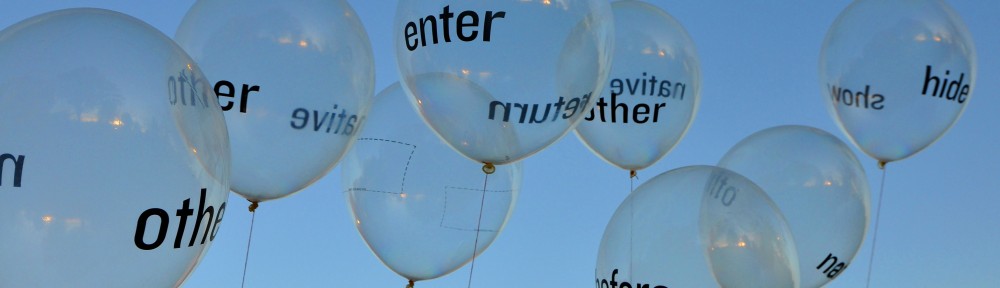
Los Angeles artist Pae White creates site specific installations merging art, design, and architecture. Presently at the South London Gallery you can find her latest installation titled Too Much Night, Again where 48km of yarn is interwoven and criss-crossed into connecting supergraphic letterforms spelling out the words “Unmattering” on one wall and “Tiger Time” on the opposite one. The work was inspired by a period of insomnia which is hinted at in its name. Depending on your location within the space, the words emerge and fade. Pretty spectacular.
online collaborative tools
Wow, amazing amount of tools available on this site a bit dated from 2010.
http://www.mindmeister.com/12213323/best-online-collaboration-tools-2010-robin-good-s-collaborative-map
A shorter, more current list can be found here:

http://www.creativebloq.com/design-tools/10-great-online-collaboration-tools-designers-912855
Lighting: why it matters.
“Research demonstrates that light has a profound impact on people —
on their physical, physiological, and psychological health, and on their
overall performance — particularly in the workplace. And yet, despite
having an intuitive understanding of the importance of light, as well as
research-based data that proves its significance, we often fail to give it
adequate consideration when planning for the workplace”
facts and studies from Steelcase about light
http://www.oneworkplace.com/pdfs/whitepapers/TheImportanceOfQualityLighting.pdf
make a table – dig a hole
Articles on designers’ desks
These examples show how you can pick a dominant element to give your space personality — light, color, plants, wall-hangings, desk material, etc.
20 Leading Web Designers’ Desks for Your Inspiration
http://www.designer-daily.com/30-enviously-cool-home-office-setup-9693
30 Enviously Cool Home Office Setups
http://www.netmagazine.com/features/20-leading-web-designers-desks-your-inspiration
Ellen Lupton on organizing your desk
http://www.fastcompany.com/1312986/visibility-principle
Ellen writes here about organizing your desk corner to make your interests/responsibilities visible. Visualizing what you’re doing. Five key points: Show, don’t tell; See and be seen; Out of sight, out of mind…for a while; Make a list.
================
The Visibility Principle
BY ELLEN LUPTON
JULY 20, 2009

Shown above is the desk of Alicia Cheng, a graphic designer whose Brooklyn-based firm MGMT creates exhibitions, publications, and identities for cultural clients. Cheng’s desk may be cluttered, but it’s beautiful. A pile of paper sits next to her keyboard. Books lean against a sorting tray. The wall is covered with calendars, contact sheets, works in progress, and odd bits of inspiration. Cheng’s desk is an image of her busy, productive mind. It is a simple, direct manifestation of how designers think.
Many people believe that design is about how things look. Is a laptop, logo, or coffee mug pink or green, classic or contemporary, dumpy or sleek? Designers will tell you that design goes way deeper than appearances. Design is about thinking. It’s about strategy and structure and systems.
Yet thinking itself often takes a visible form. Many people do their best thinking with a pen, pencil, or keyboard. By making ideas visible, we make them concrete, giving thought an understandable shape. From quick sketches to detailed blueprints, visualization is an essential tool for thinking. It’s also a tool for communicating. A project team creating a new software application might compile a wall of PostIt notes to collaborate and brainstorm. Teachers use chalkboards to explain how a bill becomes a law, and kids learn to add and subtract by drawing pictures of apples and oranges. With that in mind–and in sight–here are four visibility principles for organization.
Show, don’t tell. A sign saying “Show, don’t tell” hangs in my daughter’s fifth-grade classroom. Generations of writers have embraced this slogan, learning to build an argument or tell a story using concrete actions and images rather than disembodied abstractions. (“The dog wagged his tail” trumps “The dog was happy.”) Thinking and communicating with examples that people can see–whether through literal pictures or mental ones–works better than trafficking in generalized “objectives,” “goals,” and other corporate vagaries.
See and be seen. Work is a social activity. Even writers, whose work requires periods of sacred isolation (fifteen minutes is often all we can find), also crave the buzz and jangle of people and public places. Everyone values some degree of privacy, but in today’s workspaces, people are increasingly visible to each other, not only through direct contiguity (Sheila’s desk is next to Fred’s desk) but also through social media and networked devices.
Out of sight, out of mind…for a while. The stuff sitting on Alicia Cheng’s desk and hanging on her wall is stuff she wants to keep in mind and find easily. The problem is, many of us post photos and reminders on our bulletin boards and soon stop looking at them. Eventually, even materials staring you in the face become invisible, fading into the background like a pee-stained rug. A vital personal workspace is constantly changing, inspiring you to keep looking.
Make a list. (You’re reading one.) Lists are one of the oldest genres of written communication. Long before people wrote down poetry, they were keeping track of flocks of sheep and bales of hay. Freeform and non-linear, lists are quick to make and easy to absorb. The act of writing a list helps you kick-start your memory and ignite new ideas. To-do lists are interactive: we often put things on lists for the sheer pleasure of crossing them out.
This week, Ellen Lupton is exploring the Visibility Principle. Whether you manage a big office or run your own show from home, you can use it to enhance your productivity.
Related:
Introducing Guest Blogger Ellen Lupton: Welcoming Design Into Our Daily Lives
Bahnhofs underground bunker
Threadless airstream
“You might have expected community-centered t-shirt company Threadless to have an interesting workspace, and you would be right. Above is the company’s Airstream trailer studio where Kristen Studard and Bob Nanna broadcast a live show on Ustream every Thursday from its Chicago headquarters.”
http://mashable.com/2010/09/20/inspiring-offices-pics/
Grip Limited
A Toronto creative shop knocks down barriers, one big orange slide at a time http://www.unlimitedmagazine.com/2010/01/officeland-grip-limited/
“There is nothing like a big orange slide plonked right in the middle of an office to obliterate hierarchy between upper management and everyone else. But then Toronto creative agency Grip Limited, home to that big orange slide, has never been a place for hierarchy. Grip, whose clients include Acura, Lululemon Athletica and Labatt, has an unusually linear team, with an astounding 11 partners. David Crichton, one of eight founding partners calls it a “flat structure” in which partners work directly with clients, and therefore with their own designers, writers, interactive and technical staff who put together campaigns. “There’s no corner office mentality. There isn’t actually a corner office,” Crichton says, adding that newly hired president Harvey Carroll has the worst digs in the space – a small, drafty office that no one else wants.”
+ They notice the little things. White Astroturf lines one of the boardrooms. “It deadens sound,” Crichton says, “but it’s also not expensive. We like to do things creatively that don’t involve spending a lot of money. It sends a message to clients that you can be creative without being excessive.”
+ That working-class ethos turns up in Grip’s logo, a bright 1960s-style orange circle meant to show the company’s working-class roots. “I would say the culture here is pretty peer-oriented. Our partners work on a client’s file directly, so that means we worked directly with everyone here,” Crichton says. (Click to see a TV reel of some of Grip’s work.)
+ The non-linear structure of the company lets employees move between departments for rare wholesale career changes within the same company. For instance, a longtime studio manager became a designer and later an art director. One former IT staffer went on to become a multimedia editor/producer at Grip’s in-house production facility. The strategy is to “let people make a career change and then keep them in the company. At the end of the day, [the happiness of] a bigger paycheque only lasts two pay periods. If you provide a place where people like to work and are respected, they’ll be happier and more enthusiastic.”


