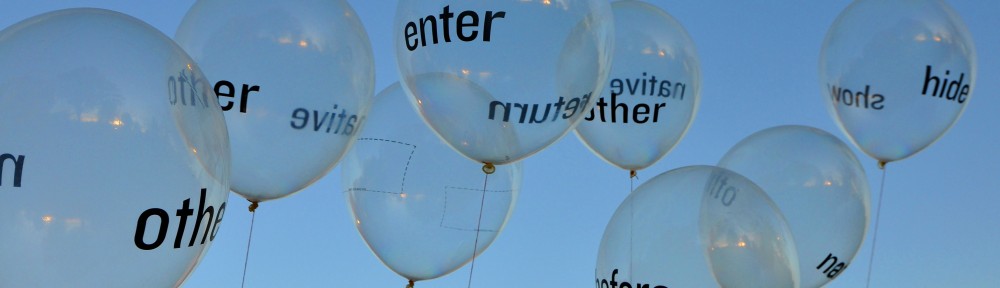
BUILD?

In Method we discuss process, Scale sets up your work space, BUILD could be how to put your project into action.

a more concise description about how to build a project
how to make perimeters that are inspiring and not confining
this is where we could include exercises and lots of examples
from conversation to actuality
getting your idea/project out in the world (kickstarter, etsy, lulu…)
large to small examples so we still cover scale

I’m suggesting we take out the exercises from the other chapters and make this last chapter more action based. Lots of projects to work on, filled with examples of what has been done and how they got started.

5 examples of books that relate to our proposal

1. DESIGN IS
http://www.papress.com/html/book.details.page.tpl?isbn=9781568983141
Design Is celebrates the immense variety of design. Everyone and everything is here. Scholars, pundits, designers, architects, critics, and reporters are all represented, while everthing from election ballots to urban design, chairs to fuzzy logic, housing to the Internet is discussed. The richness of thought and stimulating ideas found here could only come from Metropolismagazine. Where else would bar codes be discussed along with cities, NASA rub shoulders with garden design, and a mechanical yam-pounder share space with Robert Moses? No other publication can provide the density of observation, range of perception, and unbridled enthusiasm for design found here. Like Metropolis itself, Design Is radiates the confidence and missionary zeal of those who would change the world

2. DOT DOT DOT
http://www.chroniclebooks.com/titles/art-design/graphic-design/dot-dot-dot-18.html
After seventeen issues, Dot Dot Dot remains the must-read journal on every designers desk. By steering clear of both commercial portfolio presentations and impenetrable academic theory, it has become the premier venue for creative journalism on diverse subjectsmusic, art, literature, and architecturethat affect the way we think about and make design. Dot Dot Dot 18 presents the latest fieldwork of a multidisciplinary group ofcontributors investigating the web of influences shaping contemporary culture. Smart, passionate, and imaginativelydesigned, Dot Dot Dot is for graphic designers and anyone interested in the visual arts.

3. TYPOHOLIC
http://www.victionary.com/book/typoholic_info.html
Letters and words are the most efficient way to talk. The great demand for quick and effective communication has challenged designers’ originality to innovate expressions in words, phrases and letter forms. From digital types to real life installations, Typoholic is a thorough review of modern type-making that makes the core of communication itself. In two separate sections, the book introduces more than 40 new illustrative and animated type families that come in a narrative package of alphabets, numbers and punctuations, followed by 200 colourful pages of ad-hoc projects featuring custom type designs as logo marks, campaign installations and editorial art. The book would particularly highlight how meanings of words and phrases multiples when typography meets design, handworks, photography, performance art and illustrations that individually convert the process of reading into unique experience which one can embrace, encounter, touch and explore.

4. DESIGN PLAY
http://www.victionary.com/book/design-play_info.html
Games and tricks often breed big ideas, and the idea of ‘Play’ has prompted artists and designers to bring peculiarity into the routine and amuse the bored with visual tricks and interactive designs. Be it simple or complicated, deliberate or unintentional, this art of spreading joy demands a strong commitment to break the rules and a knack of poking fun in a lighthearted way. From mimicries to interactive approaches that engage users in the development of desirable design outcomes, Design•Play put together a rich source of playful ideas that challenge your normative perceptions by means of five distinctive kinds of ‘Play’ embraced in graphic, product and spatial designs.

5. CREATIVE ISLAND
http://www.laurenceking.com/product/Creative+Island+2.htm
Following the success of the first volume, Creative Island 2 takes an entirely fresh look at the extraordinary range and quality of design in Britain today, including work from 25 design disciplines – from architecture and engineering to fashion and jewellery; from new media and graphics to theatre and retail design, and many more. Showing more than 100 recent projects, and also featuring design ideas and visuals of work that is yet to be realized, each one tells the designers’ stories of their work in their own words. Through a series of themes, John Sorrell explores the relationships between different projects and the way in which different disciplines cross-fertilize, which, he argues, is the key reason for the current wealth of inspired design from the United Kingdom.

Para Clock

concrete, tradition, geometry, participatory

We love to make things, and we really want to make beautiful wall clocks.

Para-Clocks is about:

  • Combining digital design methods with traditional craft using concrete
  • And most importantly, involving YOU in the design process!

Inspiration

We were first inspired by radial geometry and symmetry found in architecture and textiles from every culture around the world. Certain patterns from these cultures can be boiled down to a simple set of steps and rules for making them. Designing using parametric software allows us to create many variations of radial patterns based off of similar sets of rules; but these are then played with and manipulated, allowing each pattern to be expressive in surprising ways.

watch the kickstarter campaign at: http://www.kickstarter.com/projects/224392735/para-clocks-project

poster, chair?

http://www.designboom.com/weblog/cat/10/view/19771/sebastian-errazuriz-occupy-chairs-the-armory-show-2012.html

sebastian errazuriz has developed the art-furniture collection ‘occupy chairs’. the series consists of twelve chairs formed from plywood, decorated by white acrylic paint and a replica of one of several signs used by protesters in the occupy wall street movement,
written in black paint upon the surface of the flattened folding chairs. the artist created the pieces as dual protest sign/seating implements.

when not in use, the message of the protester may be read on the surface of the object and while secured in chair form, the piece may serve protesters to better occupy public spaces. additionally, the series was created with the chilean-born artist’s vision to occupy the homes of the 1% with the message of the 99%. errazuriz believes this effort will be achieved through the action of the collectors, being typically of the 1%, purchasing a piece from the collection. this choice to purchase this art work would bring the sentiments of the protesters into the homesof the 1%. in this way, the art buyers would monetarily support the efforts of the masses and, by default, would share the message of the protesters with other members of this socioeconomic class.

as a double-sided mirror the occupy chairs also explore the potential for these complaints against the richest one percent to be transformed into
glamorous fashionable catch phrases in design-art pieces that celebrate the exclusive luxury market.
‘ – sebastian errazuriz

ruslan khasanov: making of sunbeam type

another example we could use in the last chapter. Follow the link to see them in motion.

http://www.designboom.com/weblog/cat/10/view/20136/ruslan-khasanov-making-of-sunbeam-type.html

khasanov, based in ekaterinburg, russia,
has developed an entirely sunlight-formed typeface, shaped through the dispersion of light. this phenomenon is most commonly observed in the occurrence
of a rainbow, displaying the spatial separation of white light into the differing wavelengths– resulting in a notable variation in color.

in order to harness this light effect, khasanov first experimented with glass and mirrors as he added water to these reflective media in an effort to create
the glittered, rainbow alphabet. in the initial ‘sunbeamtype’ explorations, the designer achieved interesting effects, although he realized he had not quite tapped into
the potential for what he had envisioned as a radiant, sunbeam typeface. khasanov tells designboom, ‘I thought of the light dispersion phenomenon (the splitting of the
white light into a rainbow). all I needed was to deflect the light by transparent refracting mediums. I’ve used gel by dabbing on a glass and then I draw
the letters on with a clean brush. all I had to do was to bring that glass to the sunbeam and to reflect letters by a lens on the background.’ 
by re-determining
the angle and a distance from which the digital camera was positioned to the piece of glass with gel-scrawled type, the designer was able to achieve a fascinating
trick of light. it was due to this subtle shift in materials and method that the designer was able to document his sun-formed font.


wandering territory

“Nestled in that no man’s land, a new era with new work is being prepared; artistic and elastic statements that without a doubt are shifting between all disciplines and all dimensions.”

The Pop-Up Generation
Design Between Dimensions
By Lidewij Edelkoort

13 December 2011 – 12 April 2012

the exhibition ‘the pop-up generation: design between dimensions’, investigates the trends of screen culture, flat-packing, and pop-up shops
by graphic designer anna garforth, in collaboration with vinke display

process video (really great!)

http://vimeo.com/36152966

http://www.motimuseum.nl/en/exhibitions/current/the-pop-up-generation/855

“In 2010, the Japanese fashion designer Issey Miyake first presented a ground-breaking collection called 132 5. Working closely with a computer scientist, mathematical algorithms were designed into 3D shapes that are then heat-pressed into two-dimensional forms. When these garments are folded, they resemble origami creations. When they are unfolded and put on, dimensional shapes pop-out and protrude from the body.”

“Young generations born with and behind the screen live in a shadow area, a no man’s land between the second and third dimension that they wish to connect. This popup generation moves easily from 2D to 3D and back again as if they do not even notice that there is a difference. The brain is trained to see volume in a flat sketch and to discover a structure behind the volume found in an architectonic drawing.”

Hit the jackpot- so many interesting projects. I’ll add more later
===========ZVEZ=======3/27/12=======
Sadly, I cannot find a graphic designer on the list of participants here. I think it’s important to keep gd as the core from which we’re writing.

from the MOTI museum website (Museum of the Image in Breda)

“Armed with technological developments, today’s designers are now able to allow themselves to be unrestricted by dimensions”

“At the start of the 21st century, the world is a cacophony of different cultures, destitute economies, innovative mass media and hyper technology. Old structures disappear and are replaced by a longing for synergy that flourishes with the new worldwide means of communication. In the practice of design, disciplines merge and worlds are linked together; 2D & 3D, analogue & digital, culture & capital, science & art, nature & technology and local & global.”

Participating designers:
Kiki van Eijk (NL), Catharina van Eetvelde (BE), Rodrigo Solorzano (MEX), Anthony Kleinepier (NL), Tord Boontje (NL), Bartosz Mucha (PL), Jaime Hayon (SP), Studio Job (NL), Niels Meulman (NL), Anna Garforth (GB), Carla Fernandez, Niels Hoebers (NL) Eric Ku (USA), Camile Scherrer (CH), Eley Kishimoto (JP), Carolina Wilcke (BE), Issey Miyake (JP), Laurens Manders (NL), Front (SE), Molo (CA), Richard Woods (GB) and Neozoon.


Kiki van Eijk (NL) — furniture design
Catharina van Eetvelde (BE) — animator/artist
Rodrigo Solorzano (MEX) — industrial design, origami type stuff, interesting diy toy kit for kids
Anthony Kleinepier (NL)
Tord Boontje (NL)
Bartosz Mucha (PL)
Jaime Hayon (SP)
Studio Job (NL)
Niels Meulman (NL)
Anna Garforth (GB
Carla Fernandez, Niels Hoebers (NL)
Eric Ku (USA) — graphic designer!!!
Camile Scherrer (CH)
Eley Kishimoto (JP)
Carolina Wilcke (BE) — product designer
Issey Miyake (JP)
Laurens Manders (NL)
Front (SE)
Molo (CA) — canadian architects and product designers
Richard Woods (GB) — british sculptor, fake surfaces
Neozoon.


IDEO.org

IDEO.org Fellows Bring Beautiful Design to Humanitarian Efforts

November 6, 2011
http://www.good.is/post/ideo-org-fellows-bring-beautiful-design-to-humanitarian-efforts/

“In the long run, we hope the fellowship program will inspire the continued sharing and spread of human-centered design,” Martin says. We’re hoping the experiences gained and skills learned will help create the framework for a new cadre of leaders who will create new solutions to the challenges of poverty.”

The global water crisis seems simple enough to solve: Dig wells in communities that don’t have one, and let the water flow. After all, the problem is not that there isn’t enough water on Earth, but more of a logistical challenge about how to move it from point A to point B. But in fact, providing safe drinking water to the 1 billion people who don’t have it presents a tangled knot of complex engineering, political, economic, scientific, and cultural challenges.

That’s exactly why the water issue is such a good fit for the big-picture thinkers that make up a new breed of humanitarians—designers. IDEO.org design fellows are currently working in Nepal and Ethiopia to create systems that can support people’s varied uses of water, from urban gardening in the slums of Addis Ababa to fluoride treatment plants in the Rift Valley. The goal is to take a “holistic and human centered approach to meeting people’s water needs,” organizers explain on the project website.

>>>Human-centered design, the framework through which all IDEO.org fellows operate, guides designers to come in with a “beginner’s mind,” asking lots of questions and observing everyday moments, resisting the instinct to jump to conclusions or try to sound smart. It’s relationships and hunches, not strategic plans and short-term goals, that are the real tools of the human-centered designer. Liz Ogbu, one of the fellows working on the water project, writes, “We are starting to think of available water services and technology as analogous to a set of Lego parts that can be applied and rearranged depending on the needs of the community.”

Taking Design Thinking to the Nonprofit World

October 3, 2011
http://philanthropy.com/blogs/innovation/taking-design-thinking-to-the-nonprofit-world/35

IDEO’s approach to design starts with learning as much as possible about the people who will eventually use the product–their lives, their needs, their aspirations–rather than starting with a hypothesis about what they need, says Patrice Martin, creative director of IDEO.org. Too often, companies and organizations start the process thinking about what’s feasible or viable, but she says that doesn’t matter “unless what you’re creating is actually desired by the people you’re designing it for.”

‘More Dignity’

Last year the design company started working with Water & Sanitation for the Urban Poor, a nonprofit in London, and Unilever to develop a business to provide new sanitation products and services for city dwellers in Ghana. During a trip to the West African country, the company’s consultants set up interviews with many types of potential customers, such as women, heads of households, teachers, laborers, the elderly, and people with disabilities.

IDEO helped a nonprofit design an in-home sanitation service in Kumasi, Ghana.IDEO helped a nonprofit design an in-home sanitation service in Kumasi, Ghana.

The consultants asked “an incredible array of questions,” says Andy Narracott, program coordinator at Water & Sanitation for the Urban Poor.

He says some of the questions were very personal: how much money their household earned, what kind of work they did, how many people lived in their home, did they have a toilet, what sanitation products and services they currently pay for.

One woman they talked to had a question for her interviewers: Why have you come all the way from your country to ask about my toilet?

Mr. Narracott says most nonprofit organizations would have said, “A toilet is good for your health, and we want to help you.”

By contrast, he says, one of the consultants told the woman that they were with Unilever, and they wanted to create a sanitation product people would be happy to buy but that also improves people’s health.

“From my perspective, that provides a lot more dignity than a typical [nonprofit]  approach,” says Mr. Narracott.

Testing Ideas

After gaining an understanding of what customers want, IDEO lays out the options and develops prototypes to be tested.

“It doesn’t have to be a solution that’s ready to go to market,” says Ms. Martin, of IDEO.org. “Instead it’s something that acts like or looks like the experience that we’re trying to create. We get people’s reactions. We see what works; we see what doesn’t. And we can build on that.”

The portable toilet IDEO designed for the projectThe portable toilet IDEO designed for the project

After several iterations, IDEO developed a portable toilet for the project in Ghana. Water & Sanitation for the Urban Poor is now running a six-month test of a service that rents the toilets and charges a weekly fee for the waste to be removed. The trial started with 20 customers, who got the first month of service free. Two months into the trial, all 20 customers had agreed to pay for the service, and the nonprofit group is adding more customers.

Mr. Narracott says the pilot project is providing valuable financial information his group is using to develop a business plan for the service.


Nurturing Talent

IDEO.org has created a fellowship program to spread the company’s design approach in the nonprofit world.

For 11 months, the fellows–five from the nonprofit world and three from IDEO–will work with IDEO.org on nonprofit design projects in areas that focus on agriculture, financial services, health, and other areas.

The idea is that the nonprofit fellows will take their new skills back to the charitable world and that the IDEO fellows will bring a new understanding of the problems nonprofits face back to their work at the company.

“We’re bringing design and the social sector together in a big way,” says Ms. Martin. “We’re looking at the people who are working on our most intractable challenges and then we’re taking some of the best creative minds in the world and we’re putting them together.”